
Polynucleotides · 3 min read
Polynucleotides explained: a guide for clinics
What polynucleotide injectables are, how they're sourced and purified, what to compare between products, and how to stock and store them in your clinic.
By Medicare.Haus · Updated
What polynucleotides are
Polynucleotides (often shortened to PN) are long chains of purified DNA fragments, formulated as sterile injectable products for professional use. In aesthetics they are used in skin-quality protocols. Practitioners often describe them as part of a 'regenerative' or 'bio-stimulating' approach, rather than as volumisers.
Most polynucleotide products are made from fish DNA, typically salmon or trout. A purification process removes proteins and other material, leaving the polynucleotide chains.
How products differ
Polynucleotide products vary between manufacturers in ways that matter when you compare them:
- Concentration, usually in mg/ml, and the volume per syringe or vial.
- The source material and the purification method.
- Whether the product is a pure polynucleotide or a blend, for example with hyaluronic acid.
- How thick the product is, which affects how easily it injects and which needles suit it.
- The indicated areas listed in the IFU, such as the face, under-eye, neck or hands.
- The manufacturer's recommended protocol: number of sessions and the time between them.
Always work from the product's IFU and your training, not general claims online.
LUXIA polynucleotides
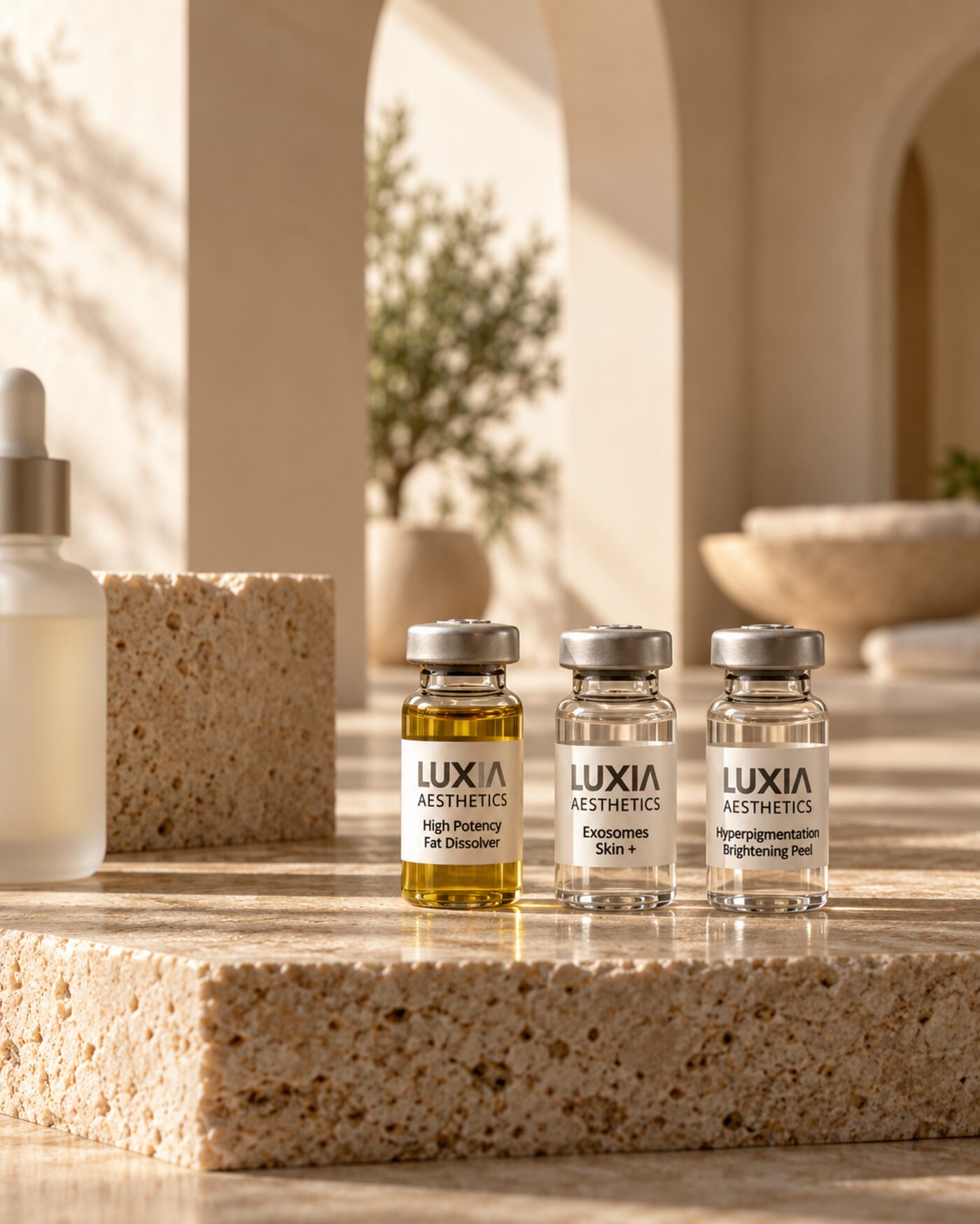
Medicare.Haus is an official LUXIA stockist. LUXIA's range includes High Potency Polynucleotides, alongside its skin boosters, exosomes and peels.
Product details, including concentration, volume and indicated areas, are shown on each product page as they're added to the shop. Approved trade accounts see their LUXIA trade price when signed in.
Consultation considerations
Because most polynucleotides are made from fish DNA, consultation forms commonly ask about fish and seafood allergies. Follow the contraindications and precautions in the manufacturer's IFU, and your training provider's guidance.
Polynucleotide treatments are usually given as a course. Explain the recommended number of sessions to the patient at consultation so they know what to expect and can plan their appointments.
Stocking polynucleotides
Because treatments run as courses, demand for polynucleotides is often steady and predictable. Many clinics plan stock around booked courses, not one-off orders.
When you're stocking up:
- Check the shelf life on delivery and rotate stock first in, first out.
- Match the stock you order to the courses you have booked.
- Ask HQ about a subscribe-and-save plan for repeat LUXIA orders, so stock arrives on a regular schedule.
Storage and handling
Store polynucleotide products exactly as the packaging directs. Some products have specific temperature ranges. Do not freeze unless the pack says you can, keep products out of direct sunlight and never use them past their expiry date.
Record batch numbers and expiry dates in the patient's notes for traceability.
Professional use
This guide is general product information for trained professionals. It is not clinical advice. Always follow the manufacturer's instructions for use (IFU), your training, your insurer's requirements and current UK guidance.
Questions
Are polynucleotides the same as dermal fillers?
No. Fillers are mainly hyaluronic acid gels used to add volume or structure. Polynucleotides are DNA-fragment products used in skin-quality protocols. Check each product's IFU for its intended use.
What are polynucleotides made from?
Most are purified DNA fragments from fish such as salmon or trout. The source is listed in the product information.
Is there a LUXIA trade price?
Yes. Approved trade accounts see their LUXIA pricing when signed in. LUXIA trade discounts are capped at 15%.
Can I order polynucleotides on a subscription?
Yes. HQ can set up subscribe-and-save plans for repeat orders, with up to 20% off LUXIA.
Trade account
See your trade price on every product.