
Dermal Fillers · 4 min read
Dermal fillers: a practitioner's buying guide
How hyaluronic acid dermal fillers are grouped, what to compare between products, and how UK practitioners can stock a balanced, compliant filler range.
By Medicare.Haus · Updated
What dermal fillers are
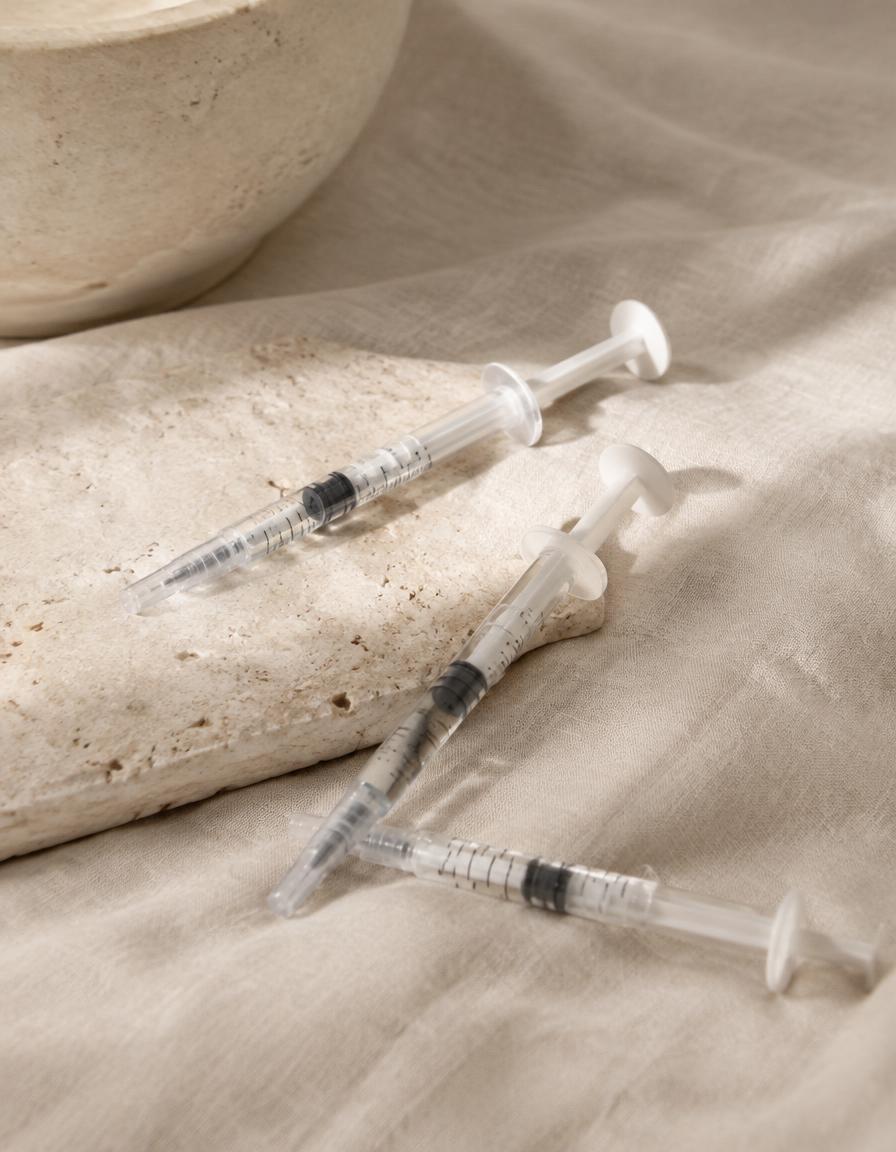
Dermal fillers are sterile injectable gels used by trained practitioners in facial aesthetic treatments. Most products on the UK market are based on cross-linked hyaluronic acid (HA), a sugar molecule that occurs naturally in the skin and binds water.
Cross-linking turns liquid hyaluronic acid into a gel that holds its shape for longer. How much it is cross-linked, how concentrated it is and how the gel is processed give each product its own character. That is why two fillers that look similar on paper can behave quite differently.
Many fillers also contain a small amount of lidocaine for patient comfort. Lidocaine content, the indicated areas and the injection depth are always set out in the manufacturer's instructions for use (IFU). The IFU is the document to check first.
Key terms on a filler data sheet
Filler manufacturers describe their gels with a handful of technical terms. Knowing them makes product sheets much easier to compare.
- HA concentration: usually given in mg/ml.
- Cross-linking: how much the HA chains are bonded together.
- G prime (G'): a measure of firmness, or how well the gel resists being deformed.
- Cohesivity: how well the gel holds together as one mass.
- Particle size or gel technology: monophasic or biphasic, and the manufacturing process used.
- Lidocaine: whether it is included, and at what concentration.
No single figure makes a filler 'better'. These properties describe how a gel is designed to behave, and manufacturers match them to the areas and depths listed in their IFU.
How filler ranges are grouped
Most brands organise their filler range by gel density and intended depth. On Medicare.Haus we group fillers in the same way, so you can find the right product family quickly:
- Lip: products designed for lip definition and volume.
- Fine: softer gels for superficial lines.
- Medium: mid-density gels for moderate lines and folds.
- Deep: firmer, more cohesive gels for deeper placement.
- Contour & Structure: high-G' gels designed for structural work such as the jawline and chin.
LUXIA Partner products sit within the Dermal Fillers menu, alongside the brand's full range under Brands.
What to compare before you buy
When you are choosing between fillers, or deciding what to add to your clinic's stock, compare products on the points that affect your practice day to day:
- Indicated areas and depths, taken from the IFU rather than marketing material.
- Volume per syringe, and which needles or cannulas come in the box.
- CE or UKCA marking, and a clear UK distribution route.
- Storage temperature and shelf life once delivered.
- Batch traceability: peel-off labels for patient records.
- The manufacturer's training and support, and whether your insurer covers the product.
Buying through a professional distributor gives you a traceable supply chain. That matters for record-keeping and for your insurance.
Building a balanced filler range
Most clinics don't need every product a brand makes. A focused range you know well is easier to manage, rotates stock faster and reduces waste from expired syringes.
A common way to start is one lip product, one fine or medium gel and one deeper structural gel from a single brand family. You can add more as your treatment menu and training grow. Keep an eye on expiry dates, rotate stock first in, first out, and set reorder points so you're never caught short before a busy clinic day.
Approved trade accounts see their own trade pricing on every filler, and can reorder quickly from recently viewed products in their account.
Storage, handling and records
Store fillers exactly as the pack directs, typically at room temperature and away from heat, freezing and direct sunlight. Do not use a product past its expiry date, or if the packaging or sterile seal is damaged.
Record the product name, batch number and expiry date in the patient's notes for every treatment. Most fillers include peel-off traceability labels for this. Keep your complication protocols, emergency kit and the details of your prescriber up to date, in line with your training and your insurer's requirements.
Professional use
This guide is general product information for trained professionals. It is not clinical advice. Always follow the manufacturer's instructions for use (IFU), your training, your insurer's requirements and current UK guidance.
Questions
Who can buy dermal fillers from Medicare.Haus?
We supply professional products only to trained practitioners and clinics with a verified trade account. You'll need a valid insurance certificate to apply.
Do you sell hyaluronidase or other prescription medicines?
No. Prescription-only medicines, including botulinum toxins and hyaluronidase, are not sold on this site.
How should I choose between a medium and a deep filler?
Use the manufacturer's IFU for the indicated areas and depths, together with your training. Gel density and firmness (G') are designed for different placements.
Can I see trade prices before I apply?
Trade prices show once your trade account is approved and you are signed in. Applying takes a few minutes.
Trade account
See your trade price on every product.