
Skin Peels · 2 min read
Skin peels: choosing a professional peel range
How professional skin peels are grouped by depth and acid type, what to compare between ranges, and the prep and aftercare products every treatment room needs.
By Medicare.Haus · Updated
How peels are grouped
Professional chemical peels are usually described in two ways: how deep they work, and which acids they contain.
By depth:
- Superficial peels work on the outermost layers of skin.
- Medium-depth peels go deeper and are typically for more experienced practitioners.
- Deep peels are a specialist category, usually carried out in a medical setting.
By acid type, common examples include glycolic, lactic and mandelic acid (alpha hydroxy acids, or AHAs), salicylic acid (a beta hydroxy acid, or BHA), and trichloroacetic acid (TCA) blends.
What to compare
When you choose a peel range, compare:
- The acids and their concentrations.
- pH, and whether the peel needs neutralising or neutralises itself.
- Which skin types and concerns each peel is indicated for.
- Recommended layers, contact time and treatment intervals.
- The prep and aftercare products the brand recommends.
- Training requirements and whether your insurer covers them.
The LUXIA Hyperpigmentation Brightening Peel
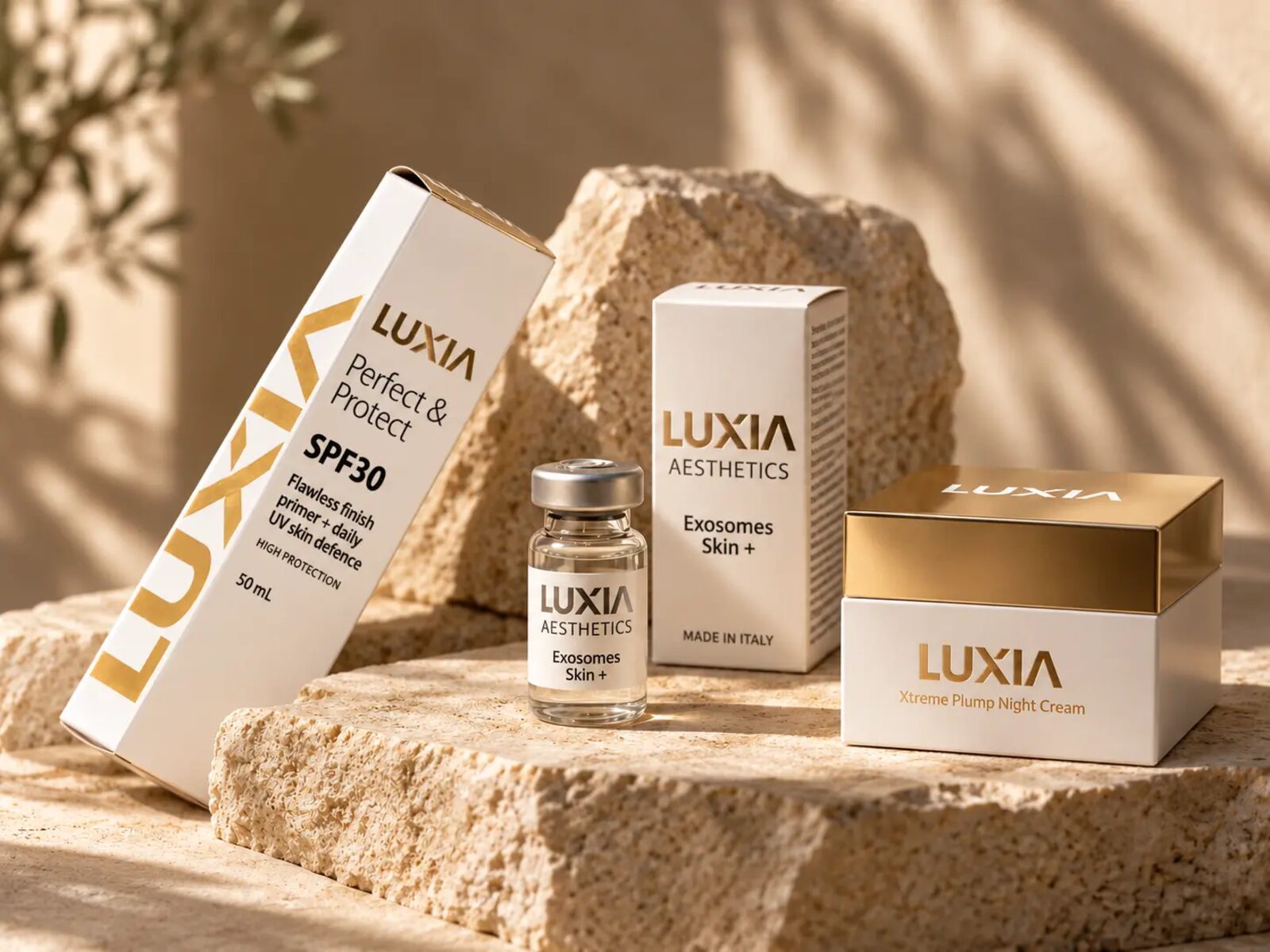
LUXIA's professional range includes a Hyperpigmentation Brightening Peel, together with supporting clinic skincare and its Perfect & Protect SPF30.
Full product details are shown on each product page, and approved trade accounts see their trade price when signed in.
What else you need
Peels are only one part of the treatment. A complete peel set-up typically includes:
- Pre-treatment skin preparation and cleansing products.
- A neutraliser, where the peel needs one.
- Fan brushes, gauze and protective eyewear.
- Post-treatment soothing products.
- Broad-spectrum SPF for home care.
- Written aftercare instructions for the patient.
Consultation and patch testing
Follow the manufacturer's guidance on skin preparation before treatment, patch testing and contraindications. Record the product, its strength, the number of layers and the contact time at each session.
Storage
Keep peels tightly closed, away from heat and direct sunlight, and use them within the shelf life shown on the pack once opened.
Professional use
This guide is general product information for trained professionals. It is not clinical advice. Always follow the manufacturer's instructions for use (IFU), your training, your insurer's requirements and current UK guidance.
Questions
What is the difference between AHA and BHA peels?
AHAs, such as glycolic and lactic acid, dissolve in water. BHAs, such as salicylic acid, dissolve in oil. Brands choose them for different skin types and concerns.
Do I need to neutralise every peel?
No. Some peels need neutralising and some neutralise themselves. Follow the product instructions.
Is SPF essential after a peel?
Manufacturers' aftercare guidance commonly includes daily broad-spectrum SPF. Follow the guidance for each product.
Can I buy LUXIA peels at trade price?
Yes. Approved trade accounts see their trade price when signed in.
Trade account
See your trade price on every product.